


Monthly Interest Rate Update
Expectations for a September 16 rate hike by the Federal Reserve jump after the Fed Chair’s hawkish speech in Jackson Hole. Meanwhile, financial conditions remain healthy even as 10-year Treasury yields rise and 30-year yields hit their highest level since 2007.
WARSH CLEARS THE AIR, RATES CLIMB ACROSS THE CURVE
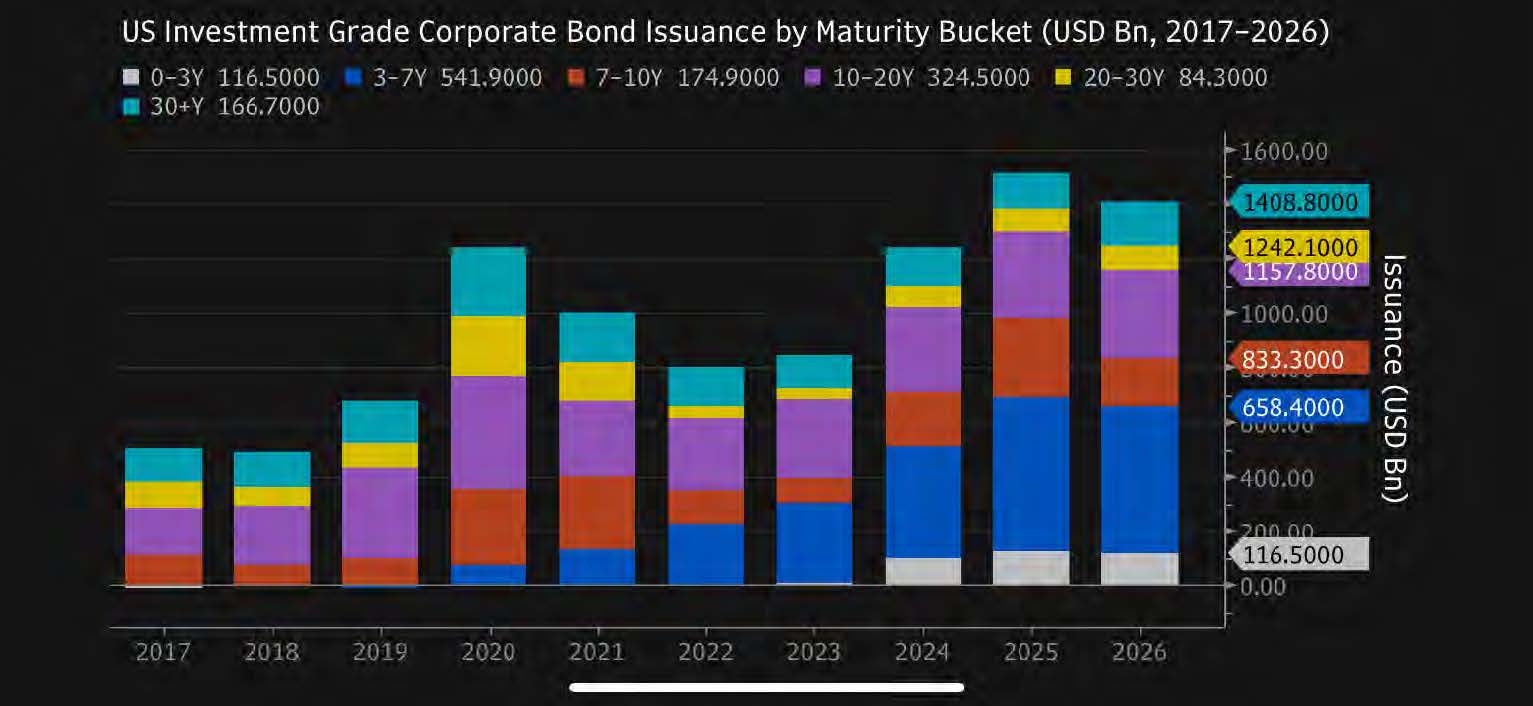
Interest rates march higher, markets poised for record corporate bond issuance
Federal Reserve Chair Kevin Warsh avoided “forward guidance” about future policy action but provided more concrete evidence that a rate hike may be needed soon. In a widely anticipated speech last week at the annual global central bank conference in Jackson Hole, Wyoming, Warsh reaffirmed the Fed’s commitment to a 2% inflation target, acknowledged data that suggest inflation is not coming down as quickly as needed, and noted that the economy remains strong and financial conditions are not overly restrictive. Though he reiterated his goal of a “quieter Fed,” his remarks convinced markets that Warsh recognizes the US central bank still “has work to do” to tame inflation. In response, 2-year Treasury yields jumped 11 basis points, and the probability of a September 16 rate hike rose to 66%. Futures markets now see an 88% chance of at least one quarter-point rate hike—and as many as three—by the end of the year.
Longer-term rates continued their upward march, despite efforts by Treasury Secretary Bessent to tamp them down. The 10-year Treasury yield reached its highest since January 2025, rising 100 basis points from their late February lows. Even more dramatically, the 30-year yield surged to 5.30%, the highest level in nearly 20 years. The trend is driven by several factors:
- The ongoing inflationary impact of tariffs and oil prices, which remain above $90 per barrel.
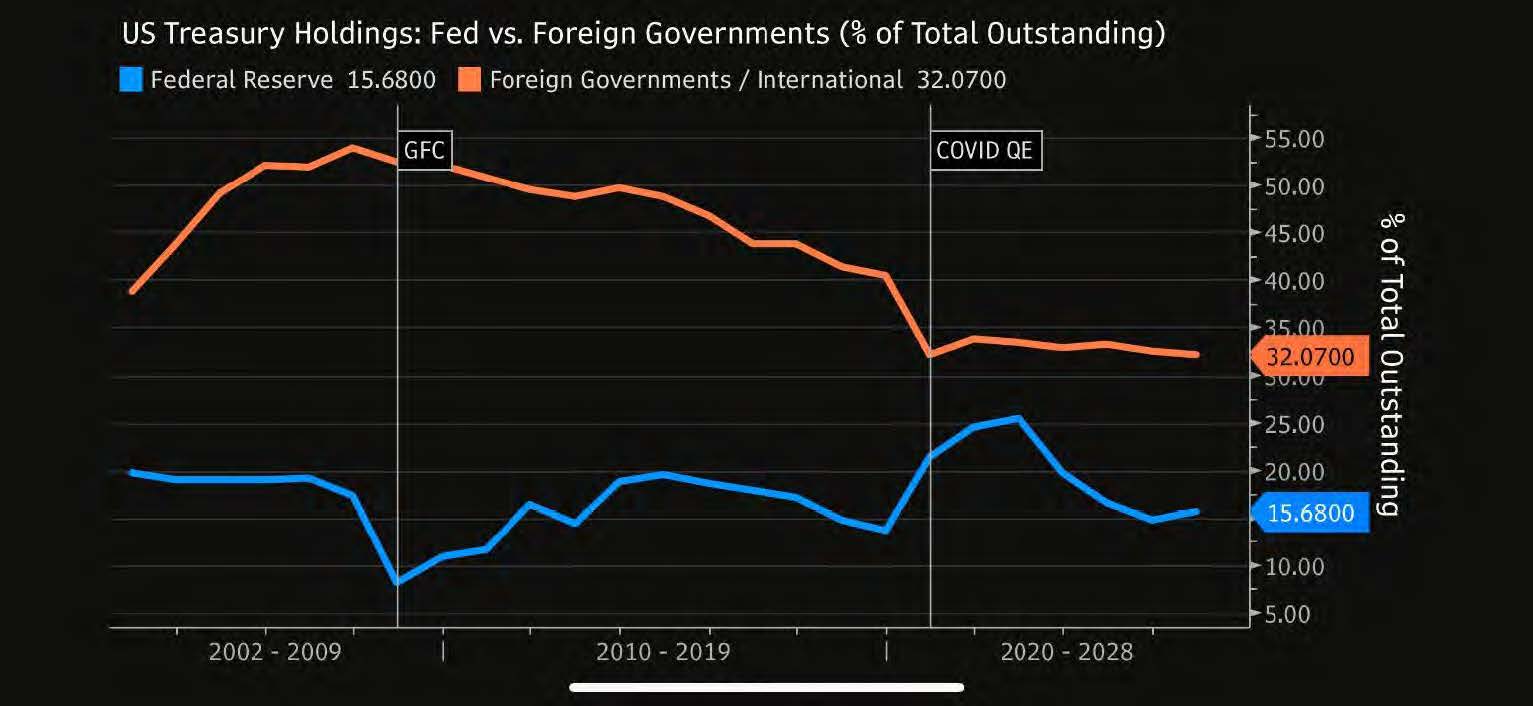
- A rising supply of Treasuries, coupled with declining demand from the Fed and foreign central banks. Private sector investors are more price sensitive than official accounts, contributing to the upward pressure on yields.
- Competition from corporate issuance, primarily to fund the AI-related surge in capital spending.
Financial conditions remain accommodative. In addition to a strong stock market and record initial public offerings, the corporate debt market is on the verge of a record-breaking year, driven largely by the AI buildout. Tech companies account for some 30% of investment grade bond issuance and 40% of long-term debt. Overall, corporate borrowers in both the investment grade and high yield markets have favored issuing in the 3-7 year range, shortening maturities in the wake of the 2023 surge in rates. This has reversed somewhat this year as investment grade borrowers have extended maturities, with increasing volumes in 10-year and 30+ year bucket. Bank market conditions (also cited by Warsh) remain favorable.
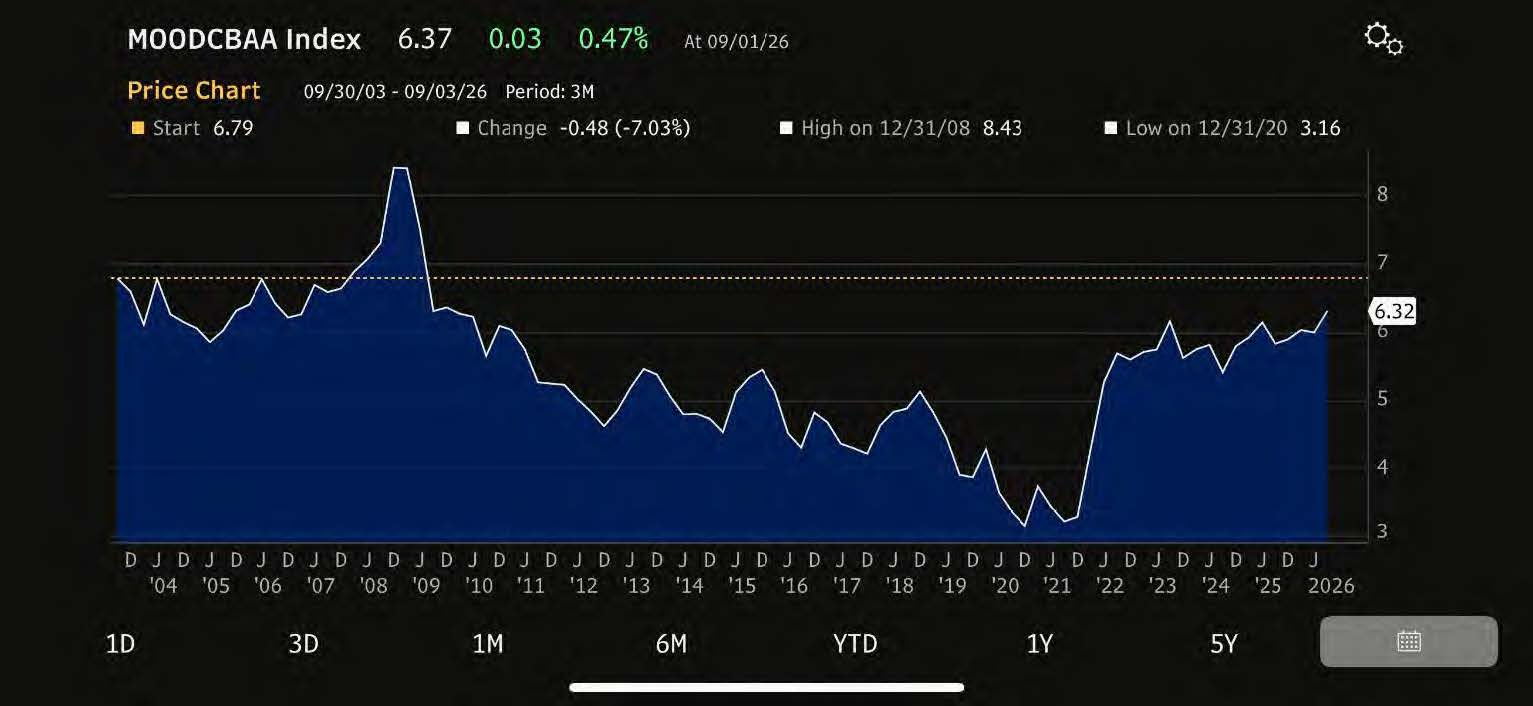
These economic conditions and market pressures are likely to keep Treasury yields, and the broader range of rates linked to them, elevated as markets continue to normalize toward pre-Great Recession levels.
Key Statistics: Benchmark rates, Unemployment and Inflation
| Year-end 2023 | Year-end 2024 | Year-end 2025 | August 31, 2026 | |
|---|---|---|---|---|
| 10-yr Treasury yield | 3.88% | 4.57% | 4.17% | 4.75% |
| 2-yr Treasury yield | 4.25% | 4.24% | 3.47% | 4.34% |
| Spread | -0.37% | 0.33% | 0.70% | 0.41% |
| Fed Funds Target (mid) | 5.375% | 4.375% | 3.625% | 3.63% |
| CME Term SOFR 1-mo | 5.35% | 4.33% | 3.69% | 3.68% |
| CPI (y/y change) | 3.1% | 2.7% | 2.7% | 3.4% |
| Core PCE (monthly) | 3.16% | 2.81% | 2.83% | 3.3% |
| 5-yr TIPS (market breakeven) | 2.15% | 2.39% | 2.27% | 2.33% |
| U-3 Unemployment | 3.7% | 4.1% | 4.4% | 4.1% |
| 12-month Change in Nonfarm Payrolls | +2,560,000 | +1,450,000 | +371,000 | +386,000 |
Moody’s Baa bond yield is returning to pre-Great Recession levels
Source: Bloomberg Finance LP
Year-to-date bond issuance poised to pass full-year 2025 peak by year-end
Source: Bloomberg Finance LP
Fed + Foreign holdings of Treasury securities drop below 50%
Source: Bloomberg Finance LP
Associated Bank offers a wide range of instruments for hedging interest rate, commodity and foreign currency risk, including foreign exchange in more than 75 currencies. Companies interested in learning more about these instruments should contact their Associated Bank Relationship Banker or the bank’s Capital Markets Department at 866-524-8836.
All rates shown are indications only and subject to change.
This material is provided to you for informational purposes only; and any use for other than informational purposes is disclaimed. It is a summary and does not purport to set forth all applicable terms or issues. It is not intended as an offer or solicitation for the purchase or sale of any financial product and is not a commitment by Associated Banc-Corp, its subsidiaries or affiliates, as to the availability of any such product at any time. The information herein is not intended to constitute legal, tax, accounting, or investment advice, and you should consult your own advisors as to such matters and the suitability of any transaction. We make no representations as to such matters or any other effects of any transaction. In no event shall we be liable for any use of, for any decision made or action taken in reliance upon, or for any inaccuracies or errors in, or omissions from, the information herein. The views expressed here are solely those of the author and do not reflect the views of Associated Banc-Corp, its subsidiaries or affiliates.
